
AgriStack: Complete Guide to Farmer ID Registration, Status Check and Every State Portal
Around 11 crore farmers in India have already received their Farmer ID under AgriStack, and crores more are still waiting to register. If you are one of them, or you are helping a parent or a neighbour finish the process, this page covers the entire subject in one place: what AgriStack is, why the government built it, how to register for your Farmer ID step by step, how to check your application status, how to download and print your card, what to do when your application gets rejected, and the exact portal link for every single state.
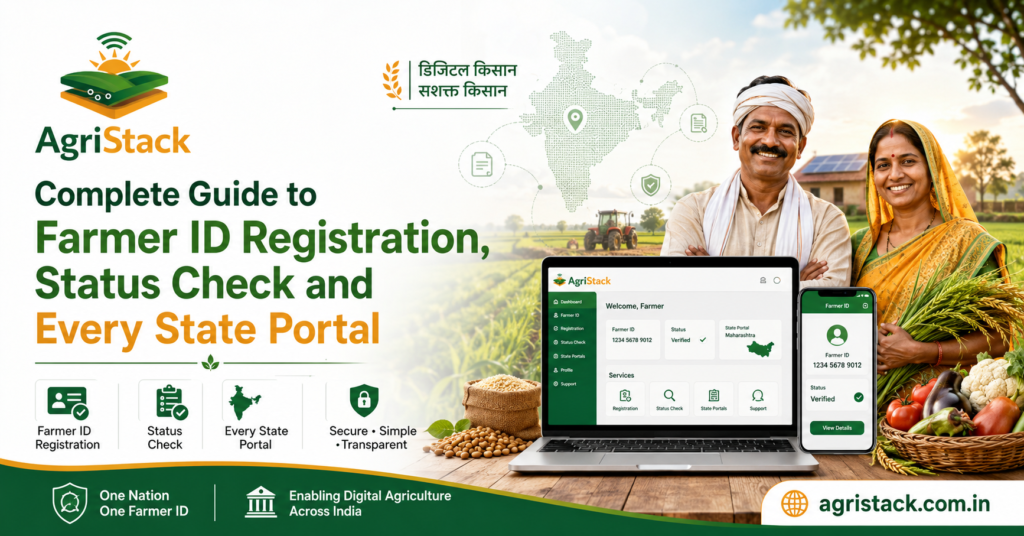
Here is why this matters right now. The government has linked PM-Kisan installments, Kisan Credit Card loans, MSP procurement, crop insurance and most farm subsidies to the Farmer ID. Several states have already stopped releasing new PM-Kisan payments to farmers who have not linked their ID. So this is not optional paperwork anymore. Without the ID, money stops reaching your bank account, and procurement centres can refuse your paddy or wheat.
The good news: registration is completely free, takes about 10 to 15 minutes, and you can finish it from a basic smartphone at home, at your nearest CSC centre, or at a village camp. Nobody needs to travel to a district office.
Read the full guide once from top to bottom if you are registering for the first time. If you only need one thing, use these quick links: registration steps, status check, card download, or jump straight to your state section below.
State-wise official AgriStack farmer registry portals
Every button opens the official government website of that state. Registration is free on all of them.
| State | Official portal |
|---|---|
| Uttar PradeshUP Farmer Registry (UPFR) | Open UPFR Portal |
| MaharashtraMaharashtra Farmer Registry (MHFR) | Open MHFR Portal |
| Madhya PradeshMP Farmer Registry (MPFR) | Open MPFR Portal |
| GujaratGujarat Farmer Registry (GIFR) | Open GIFR Portal |
| RajasthanRajasthan Farmer Registry (RJFR) | Open RJFR Portal |
| BiharBihar Farmer Registry (BHFR) | Open BHFR Portal |
| OdishaKrushak Odisha | Open Krushak Odisha |
| TelanganaTelangana Farmer Registry | Open TGFR Portal |
| Andhra PradeshAP Farmer Registry (APFR) | Open APFR Portal |
| AssamAssam Farmer Registry | Open Assam Portal |
| KeralaAIMS Kerala | Open AIMS Kerala |
| Tamil NaduTN Farmer Registry (TNFR) | Open TNFR Portal |
| KarnatakaFRUITS Portal | Open FRUITS Portal |
| West BengalWB Farmer Registry (WBFR) | Open WBFR Portal |
| All other states & UTsNational AgriStack portal | Open AgriStack India |
What is AgriStack? The full background
AgriStack is a digital public infrastructure for agriculture, built by the Ministry of Agriculture and Farmers Welfare, Government of India. In plain words, it is one national computer system that keeps verified records of every farmer, every farm plot, and every crop sown in the country.
To understand why this was needed, look at how things worked earlier. A farmer in Uttar Pradesh who wanted a crop loan had to bring khatauni copies to the bank. The same farmer applying for PM-Kisan submitted the same papers again to a different office. When he sold wheat at a procurement centre, staff there checked his land size from yet another register. Every department kept its own list, the lists never matched, and the farmer ran between offices carrying photocopies. Fake beneficiaries entered these lists easily because no single system could cross-check them.
AgriStack ends this duplication. Once a farmer’s identity and land are verified one time, every department reads from the same record. The bank sees the same land details that the procurement centre sees. A subsidy portal knows instantly whether the applicant is a real farmer. The farmer proves everything once and never again.
The Union Cabinet approved the Digital Agriculture Mission in September 2024 with a budget of Rs 2,817 crore, and AgriStack is its backbone. The stated target was to create digital identities for crores of farmers and complete the digital crop survey across the country in phases. States build and operate their own registries on a common national design, which is why every state portal looks similar and sits on the agristack.gov.in domain.
The three registries inside AgriStack
The whole system stands on three databases. Knowing all three helps you understand why officials keep visiting your field and why crop entries matter.
1. Farmers Registry
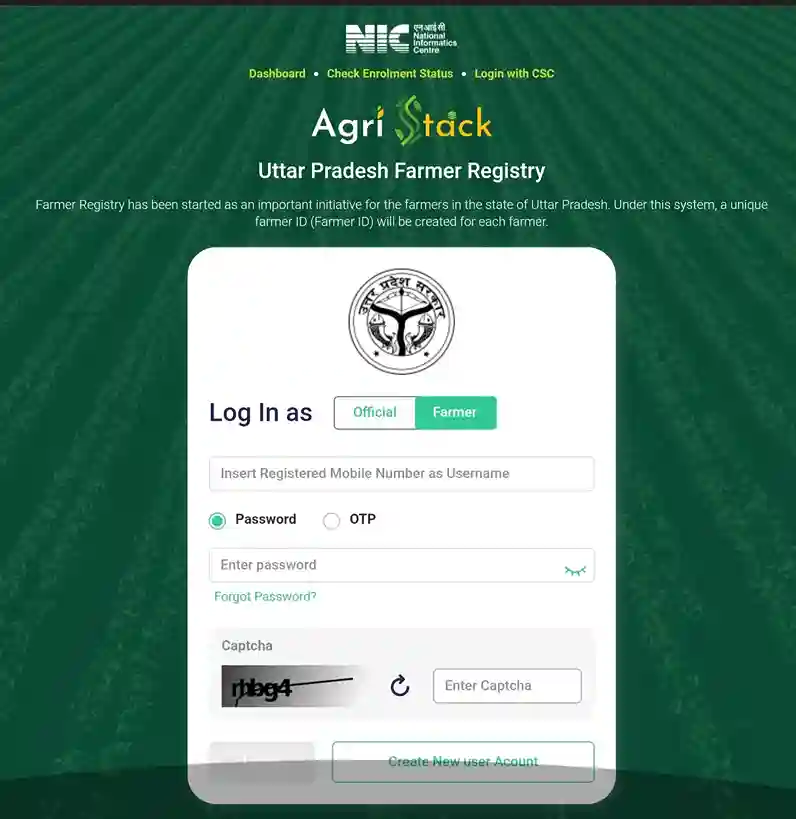
This is the core database and the one you interact with when you register. Every farmer who completes registration gets a unique 11-digit Farmer ID linked to Aadhaar and to land records. People call it the “Aadhaar for farmers” and the comparison is fairly accurate: one person, one permanent number, valid across all departments and all schemes.
The registry stores your Aadhaar-verified name and photo, your mobile number, every land parcel you own with its survey or khasra number, your social category where recorded, and links to schemes you receive. When you buy or sell land, the change flows into the same record through the state land record system. You never create a second ID.
2. Geo-referenced village maps
The second registry connects every land parcel to its exact position on a digital map. Old cadastral maps drawn on cloth and paper are being converted into GPS-accurate digital maps village by village. Once your plot is geo-referenced, there is no argument about where survey number 142 begins and ends. This layer quietly solves boundary confusion that has fed land disputes for generations, and it lets the government measure crop area from satellite images plot by plot.
3. Crop Sown Registry (Digital Crop Survey)
The third registry records which crop stands on which plot in every season. Earlier, the patwari wrote crop details in a register during girdawari, often without visiting the field. Now the entry is made digitally at the plot, with GPS and photo proof, either by survey staff or by the farmer through a mobile app depending on the state.
This registry decides real money. MSP procurement limits come from it: if your plot shows two acres of paddy, the centre buys paddy from you against two acres, not five. Crop insurance claims are checked against it. Drought and flood relief lists are prepared from it. A wrong or missing crop entry can block your payment even when your Farmer ID is perfect, so treat the seasonal crop survey as seriously as the registration itself.
What is the Farmer ID? Everything about the 11-digit number
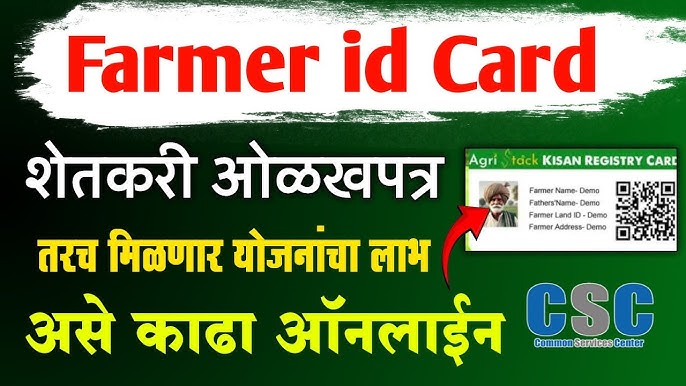
The Farmer ID (also called Farmer Registry ID, Kisan ID or FID) is an 11-digit number generated after your details pass verification in the Farmers Registry. It works as your permanent identity for all agriculture-related work, the same way Aadhaar works for general identity.
What the ID contains
Behind the number, the registry holds:
- Your name, photograph and date of birth, verified from Aadhaar through eKYC
- Your Aadhaar-linked mobile number
- Every land parcel you own or cultivate, fetched from state land records with khasra, gata or survey numbers
- The village, tehsil and district of each plot
- Your farmer category and social category, where you chose to record them
- Links to schemes you receive, added over time as departments connect their systems
One farmer, one ID, any number of plots
You get exactly one Farmer ID regardless of how many plots you own or how many villages and districts they fall in. During registration, you add each plot separately and all of them attach to the same ID. Joint holdings appear too: if a plot is jointly owned by three brothers, each brother’s ID shows his share in that plot.
The Farmer ID card
Once the ID is generated, you can download a Farmer ID card as a PDF from your state portal. The card carries your photo, name, the 11-digit number and a QR code. Any official can scan the QR code and see your verified details on the spot. Banks, procurement centres and scheme camps may ask for it, so keep one printed copy in your document file and the PDF saved on your phone. The card has no expiry date; it stays valid as long as your registry record is active.
Tenant farmers, sharecroppers and landless workers
The first phase of AgriStack focused on landowners because land records could verify them automatically. Tenant farmers and sharecroppers are being added state by state, usually with a cultivation certificate, tenancy agreement or a declaration verified by the village officer. Landless agricultural labourers are not covered under the Farmers Registry in most states yet, since the registry is built around cultivated land. If you cultivate someone else’s land, check your state section below or ask your krishi sahayak whether tenant registration has opened in your area.
Benefits of the Farmer ID: what actually changes for you
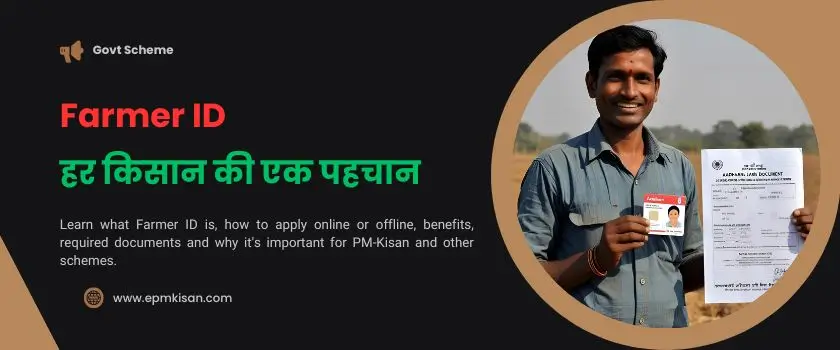
Some farmers still ask whether the effort is worth it. The honest answer has two parts: you no longer have a choice for most schemes, and the ID genuinely removes work you used to do again and again. Here is the full picture, scheme by scheme.
PM-Kisan Samman Nidhi
The government has made the Farmer ID mandatory for PM-Kisan in a phased manner. New applicants need it in most states already, and existing beneficiaries are being asked to link their ID to keep receiving the Rs 6,000 yearly benefit in three installments. States have held special saturation camps just to link Farmer IDs with PM-Kisan records. If your installment stopped recently, a missing Farmer ID or incomplete eKYC is the most common reason.
Kisan Credit Card and crop loans
Banks can now verify your land instantly through the registry instead of asking for khatauni copies and waiting for revenue department confirmation. KCC processing that took weeks finishes in days for ID holders, and the government has been pushing banks toward same-day approval for small crop loans against a verified Farmer ID. Renewals also move faster because the bank pulls fresh land data directly.
MSP procurement of paddy, wheat and other crops
When you sell at a government procurement centre, your Farmer ID confirms your land size and your crop survey entry. The centre buys from you against your recorded sown area. Farmers without an ID or without a crop entry face limits or outright refusal in states where procurement is fully linked. Chhattisgarh’s dhan kharidi, Punjab and Haryana’s wheat and paddy procurement, and Telangana’s paddy purchase all run on farmer registration data.
Crop insurance under PMFBY
Insurance enrollment and claim settlement use the Crop Sown Registry. When your insured crop matches your digital crop entry, claims settle without the usual dispute over what was actually sown. Satellite-based loss assessment also works plot by plot only because plots are geo-referenced.
Subsidies on seeds, fertilisers, machinery and drip irrigation
State DBT portals are connecting to AgriStack one after another. Maharashtra’s MahaDBT, Gujarat’s iKhedut, MP’s e-Krishi Yantra portal and Odisha’s Krushak Odisha already pull farmer data from their registries. Once connected, you apply for a tractor subsidy or a drip irrigation scheme by entering just your Farmer ID, and the form fills itself.
Disaster relief and input subsidy after calamities
After a flood, hailstorm or drought, relief lists are prepared from the registry and the crop survey instead of fresh field surveys that took months. Registered farmers receive compensation directly in their bank account, often within weeks, without submitting any application at the tehsil.
Soil health cards, advisories and future services
The registry becomes the base for soil health card delivery, weather advisories by SMS, and credit scoring for farm loans. Private services like insurance companies and agri-input suppliers will also verify farmers through consented registry access, which should reduce fraud in seed and pesticide dealer networks.
One hidden benefit: your land record gets checked
During registration, the portal shows your land record as the government has it. Lakhs of farmers discovered spelling mistakes, pending mutations and missing plots at this stage. Finding these errors now, when correction is a routine office task, is far better than discovering them during a loan rejection or a family partition dispute.
Documents required for farmer registration
Keep these ready before you start. Missing or mismatched documents are the number one reason applications get stuck for weeks.
- Aadhaar card of the farmer. The name on Aadhaar should match the name in land records. Minor spelling differences like Ram Kumar vs Ramkumar usually pass verification. A completely different name, or the land still recorded under a deceased father, will cause rejection.
- Mobile number linked with Aadhaar. Every OTP during registration goes to this number. If your current SIM is not the one linked with Aadhaar, the OTP will land on a number you may not even have anymore. Visit an Aadhaar Seva Kendra, update the mobile number, wait two to three days, then register. This one issue blocks more registrations than everything else combined.
- Land record details. Khatauni and khasra number in northern states, gata number in UP, survey number in western and southern states, patta number in Tamil Nadu. You usually do not upload any document because the portal fetches records automatically from the state land record system, but you must know the numbers to search and select your plots correctly. A fresh copy of your khatauni or 7/12 extract (Maharashtra) or pahani (Telangana) helps.
- Bank passbook. Some states record bank details during registration; everywhere else it helps you cross-check that the account receiving DBT matches your Aadhaar seeding.
- Caste certificate, only if you want your category recorded for scheme eligibility. Optional in most states.
- Tenancy or cultivation certificate for tenant farmers, in states where tenant registration is open.
There is no fee for any of this. If anyone demands money for “government charges,” they are cheating you. The only legitimate payment is the small CSC service charge, explained below.
How to register for your Farmer ID: complete step-by-step guide
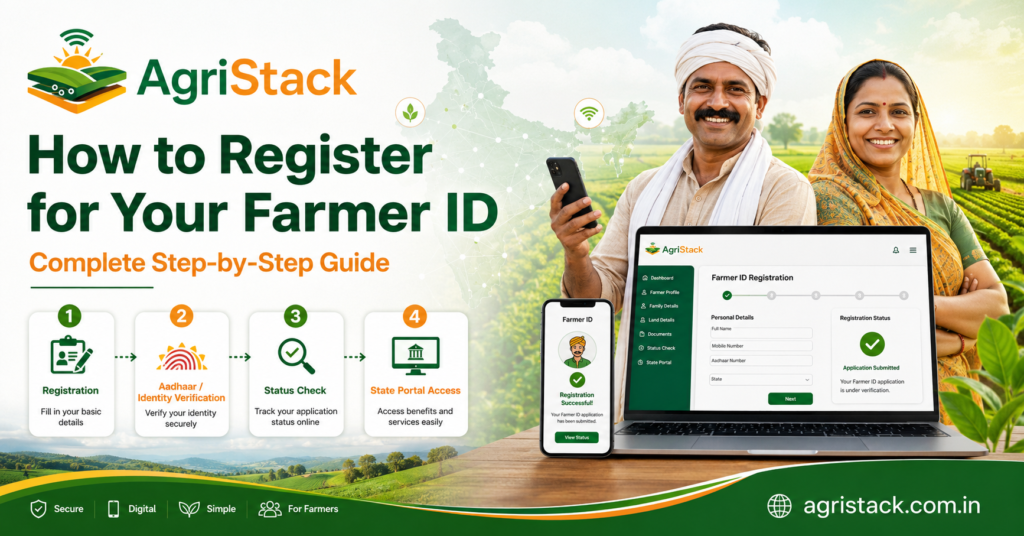
There are three routes: doing it yourself online, going through a CSC centre, or attending a village camp. All three feed the same registry and produce the same ID. Pick whichever suits you.
Method 1: Self-registration from your mobile or computer
This is the fastest route if your Aadhaar-linked mobile is active and you can follow instructions on screen in Hindi, English or your state language.
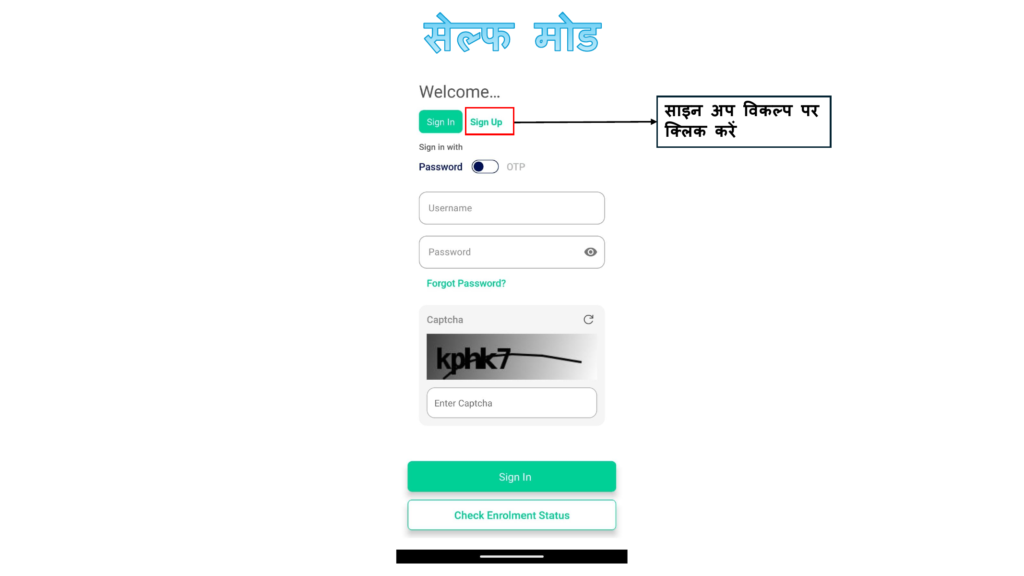
Step 1: Open your state’s official Farmer Registry portal. Each state has its own address on the agristack.gov.in domain. UP uses upfr.agristack.gov.in, MP uses mpfr.agristack.gov.in, Gujarat uses gifr.agristack.gov.in, Maharashtra uses mhfr.agristack.gov.in, Rajasthan uses rjfr.agristack.gov.in and Bihar uses bhfr.agristack.gov.in. The complete list for all states is in the state section below. Type the address yourself and check it ends with agristack.gov.in before entering anything. Fake lookalike websites exist, and your Aadhaar plus OTP is exactly what fraudsters want.
Step 2: Choose Farmer login and create a new account. On the portal home page, select the “Farmer” option (the other options are for officials and CSC operators). Click “Create new user account.” Enter your Aadhaar number and tick the consent box.
Step 3: Complete Aadhaar eKYC with OTP. An OTP arrives on your Aadhaar-linked mobile. Enter it. The portal pulls your name, photo, date of birth and address from Aadhaar automatically. If no OTP comes after two or three attempts, stop here and fix your Aadhaar mobile linking first; nothing else will work without it.
Step 4: Set your password and log in. Create a password, note it somewhere safe, and log in using your mobile number and the new password. From now on, this is how you enter the portal for status checks and downloads too.
Step 5: Fill the registration form. The form asks your farmer type (owner cultivator or tenant where available), your social category, and a few dropdown selections. Nothing here needs typing skill; it is mostly selecting from lists. Choose your category honestly because scheme eligibility later reads from these fields.
Step 6: Add every land parcel. This is the heart of the registration and the step where most mistakes happen. Select your district, tehsil and village. Then search your plot by khasra, gata or survey number. The portal displays the land record entry with the owner names. Match your name carefully. Add each plot one by one, including plots in other villages or districts; all of them link to the same ID. If a plot shows your late father’s name because mutation is pending, do not select someone else’s plot to compensate. Either use the inheritance option where your state provides one, or complete the mutation first and register after.
Step 7: Review, give consent and submit. Read the summary page slowly. Check the spelling of your name, the plot numbers and the total area. Tick the declaration, and confirm submission with a final Aadhaar OTP. The screen shows an enrollment ID (also called application number), and the same number reaches you by SMS. Save this number; it is your only handle to track the application.
Step 8: Wait for verification and approval. Your application goes to agriculture department and revenue officials for checking against land records. Approval takes anywhere from two or three days to three or four weeks depending on your district’s workload. When approved, your 11-digit Farmer ID is generated and you get an SMS. Then log in and download your card.
Method 2: Registration through a CSC centre
If you are not comfortable with online forms, walk into your nearest Common Service Centre, also called Jan Seva Kendra or Digital Seva Kendra. Almost every block has several.
Carry three things: your Aadhaar card, the phone with your Aadhaar-linked SIM (the OTP comes to it, so the physical phone must be with you), and your land record numbers or a khatauni copy. The operator opens the same portal through his CSC login and completes every step described above on your behalf. It takes 10 to 20 minutes when the server is running fine.
Government fee is zero. CSC operators charge a small service fee fixed by the state, generally between Rs 10 and Rs 50. Ask for the printed acknowledgement slip with your enrollment ID before you leave, and confirm the operator entered your own mobile number in the form, not his. Some operators enter their own number to “manage OTPs,” and then the farmer can never log into his own account later.
Method 3: Village registration camps
Since 2024, states have been running Farmer Registry camps (shivirs) in villages, often combining them with PM-Kisan saturation drives. Agriculture staff, patwaris and CSC operators sit together with laptops and complete registrations on the spot, including on-the-spot fixing of small record issues because the revenue official is present at the same table.
Ask your gram panchayat, lekhpal or krishi sahayak about the next camp date in your village. Camps are the best route for elderly farmers, for anyone with a name mismatch problem, and for villages with weak mobile networks. Applications from camps also tend to get approved faster because verification happens right there.
How to check your farmer registration status
After submitting, everyone wants the answer to one question: approved or not? Here is exactly how to check, and what each status means.
Step 1: Open the same state Farmer Registry portal where you registered. Status checking works on the public page of most portals; you do not always need to log in.
Step 2: Find the link named “Check Enrollment Status,” “Track Application” or “Application Status.” It usually sits on the home screen near the login box.
Step 3: Enter your enrollment ID. Most portals also accept your Aadhaar number if you lost the enrollment ID.
Step 4: Read the status that appears:
- Pending or Under Verification: Officials have not finished checking your application. Normal for the first one or two weeks. Check again after a week.
- Approved: Your Farmer ID is generated. Log in and download your card. The ID also arrives by SMS.
- Rejected or Returned: Something did not match. The remarks column states the reason: usually a name mismatch, a wrongly selected plot, or a failed land verification. Read the remark, fix the exact issue, and re-apply. Your krishi sahayak can see the detailed internal remark if the portal shows only a short code.
- Nothing found against your number: Your submission probably never completed, which happens when the final OTP step fails or the server drops mid-way. Register again from the start.
If the status sits in Pending for more than a month, do not keep waiting silently. Visit the block agriculture office with your enrollment slip. A large pending queue in your tehsil, or one official’s login issue, can hold hundreds of applications, and a visit often shakes them loose.
How to download your Farmer ID card
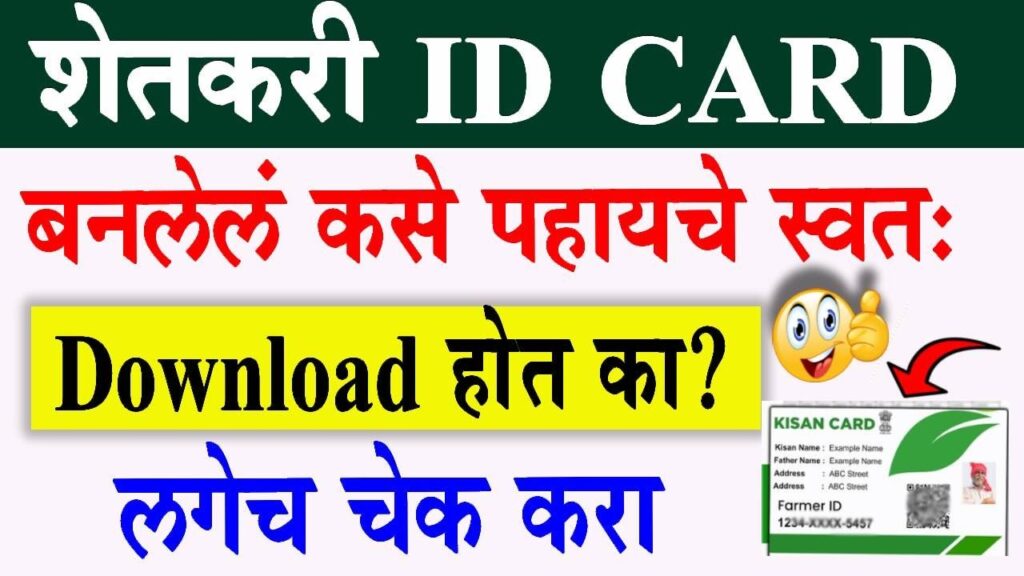
Once the status shows Approved, get your card in five minutes.
Step 1: Log in to your state portal with your mobile number and the password you set during registration.
Step 2: Your dashboard displays your Farmer ID. Look for the “Download,” “Print” or “View Farmer Details” button.
Step 3: Click it. A PDF card opens carrying your photo, name, 11-digit Farmer ID and a QR code.
Step 4: Save the PDF on your phone and email it to yourself or keep it in DigiLocker if you use it.
Step 5: Take one colour printout and keep it with your Aadhaar and bank passbook. The QR code is the part officials scan, so avoid folding the print across the code.
Forgot your password? Use “Forgot password” on the login page; the reset OTP goes to your Aadhaar-linked mobile. If you registered through a CSC and never had the password, the same forgot-password route works as long as your own mobile number was entered in the form.
State-wise AgriStack farmer registration: every state covered
Every state runs its own registry portal, and several states wrap AgriStack inside an existing local programme with its own name. Find your state below. We also maintain a full separate guide for each state with screenshots and district updates; open it from the menu after reading the summary here.
Uttar Pradesh (UPFR)

UP runs the largest farmer registry in the country on upfr.agristack.gov.in, and crores of UP farmers have already received IDs. The state pushed hard through camps in every tehsil because PM-Kisan has more beneficiaries in UP than anywhere else. Land is searched by gata number here. Farmers who registered years ago on the old upagriculture.com portal for kisan panjikaran must still do the new Farmer Registry separately; the old panjikaran does not convert automatically. Status check and card download work on the same UPFR portal, and CSC registration is available everywhere.
Maharashtra (MHFR)
Maharashtra registers farmers on mhfr.agristack.gov.in, with land verified against the 7/12 (satbara) extract. The Farmer ID is becoming the key requirement for MahaDBT, the state’s single window for all subsidy schemes from tractors to drip irrigation, so Maharashtra farmers effectively need the ID for every scheme application. Districts have been running registration drives through talathis. If your 7/12 still shows old family entries, clear the ferfar (mutation) first, then register.
Madhya Pradesh (MPFR)
MP uses mpfr.agristack.gov.in, connected with the MP Kisan portal and the SAARA system that handles girdawari. Khasra-linked verification is smooth in MP because the state digitised land records early. The Farmer ID links to e-uparjan for wheat and paddy procurement, so MP farmers who sell at government centres should finish registration before the next procurement season opens.
Gujarat (GIFR)
Gujarat’s registry runs on gifr.agristack.gov.in and works alongside the well-known iKhedut portal, where all farm scheme applications happen. Survey-number based verification, quick approvals, and among the lowest competition keyword-wise, which tells you registrations are moving fast. Tenant cultivation is common in Saurashtra, and Gujarat has been extending registry coverage there gradually.
Rajasthan (RJFR)
Rajasthan registers farmers on rjfr.agristack.gov.in. The state already had strong digital plumbing through Jan Aadhaar, so many farmer details pre-fill. Rajasthan links the Farmer ID with its crop loan waiver history and cooperative credit records. Desert districts had special camps because CSC density is lower there.
Bihar (BHFR / Agristack Bihar)
Bihar runs bhfr.agristack.gov.in, and the state’s earlier DBT Agriculture portal (dbtagriculture.bihar.gov.in) database, where lakhs of Bihar farmers held a 13-digit registration number, feeds into it. The old DBT number is not the Farmer ID; Bihar farmers need the new 11-digit ID as well. Land fragmentation is extreme in Bihar, so add every small plot patiently during registration rather than only the biggest one.
Odisha (Krushak Odisha)
Odisha took its own route with the Krushak Odisha portal (krushak.odisha.gov.in), a farmer database originally built for the KALIA scheme, now aligned with AgriStack. Odisha farmers search their status and farmer ID list on Krushak Odisha, and paddy procurement through the food Odisha system (paddy procurement registration) reads from it. Because Odisha covered sharecroppers under KALIA, its registry includes many cultivators who own no land, which most states have not managed yet.
Telangana (Rythu ecosystem)
Telangana links farmer registration with the Rythu Bharosa payment system (earlier Rythu Bandhu), which pays investment support per acre. Land verification runs on the Dharani land records platform, and pahani entries decide everything here. Farmers check Rythu Bharosa payment status and registration through the agriculture department portals. Telangana also runs OLMS for license management in agri-marketing. Because the per-acre payment depends directly on recorded land, Telangana farmers should verify their registry entries with extra care.
Andhra Pradesh (APFR / e-Panta)
AP built one of the most field-heavy systems in the country. Crop entries happen through e-Crop (e-Panta), recorded at the plot by village agriculture assistants working from Rythu Seva Kendras (RBKs) in every village cluster. The Farmer ID connects to Annadata Sukhibhava payments. AP farmers rarely register alone online; the RBK staff handle most of it, so your first stop in AP is the village RBK, not a website.
Assam
Assam registers farmers through its Farmer Registry alongside a massive PM-Kisan expansion drive, because lakhs of Assam farmers entered PM-Kisan late. Registration camps and CSCs handle most volume. Char area farmers with shifting river-side land face the hardest verification, and Assam has been resolving those case by case at camps. Keyword difficulty data shows Assam guides rank easily, which means fewer people write about Assam despite big demand.
Kerala (AIMS)
Kerala uses AIMS, the Agriculture Information Management System at aims.kerala.gov.in, where farmers register and apply for schemes. Kerala’s smaller average holdings and strong Krishi Bhavan network mean most farmers register through their local Krishi Bhavan office rather than alone. AIMS registration also connects to paddy procurement through Supplyco.
Tamil Nadu (TNFR / TN Agrisnet)
Tamil Nadu’s farmer data lived in TN Agrisnet for years, and the state has been moving to the AgriStack farmer registry district by district. Patta and survey numbers verify land here. The Uzhavan mobile app carries many farmer services in Tamil. TN farmers should watch their district rollout; where the new registry has opened, register fresh even if you existed in Agrisnet.
Chhattisgarh (Kisan Panjiyan)
In Chhattisgarh, farmer registration matters most for dhan kharidi, the state’s flagship paddy procurement at bonus rates. Kisan panjiyan through the cooperative societies and the Agriportal CG system decides who sells how much paddy. The AgriStack Farmer ID is being layered onto this base. If you sell paddy in CG, keep both your society panjiyan and your Farmer ID current before the kharif procurement window.
Karnataka (FRUITS)
Karnataka runs FRUITS, the Farmer Registration and Unified beneficiary Information System (fruits.karnataka.gov.in), which predates AgriStack and already assigns every farmer a FRUITS ID (FID) linked to land records. Karnataka also pioneered the digital crop survey through its Bele Samikshe app, where farmers photograph their own crops. FRUITS data aligns with the national registry, so Karnataka farmers holding a FRUITS ID are largely covered; new farmers register on FRUITS.
West Bengal (WBFR)
West Bengal’s registry (wbfr) is at an earlier stage of rollout, and the state runs its own Krishak Bandhu scheme paying per-acre support with its own database. Bengal farmers should register under Krishak Bandhu for state benefits and watch for the AgriStack registry expansion for central scheme linking. Volumes are still small but will grow as the rollout widens.
Punjab and Haryana
Both states have deep procurement systems where farmer registration decides mandi sales. Haryana’s Meri Fasal Mera Byora portal registers farmers and crops before every season and is the state’s operating base for the national registry. Punjab’s Anaaj Kharid portal registers farmers for wheat and paddy procurement. Farmers in both states must keep crop registration current every season, since arhtiya payments and MSP transfers run through these records.
Other states and union territories
Jharkhand, Uttarakhand, Himachal Pradesh, the North-Eastern states and the UTs are at different stages of the same rollout, most using the standard agristack.gov.in state portal pattern with their state code. Himachal and Uttarakhand hill farmers face the familiar problem of unpartitioned family land, which camps handle better than online self-registration. We track every state’s rollout in a separate updated guide; open the All States page from the menu if your state is not listed above.
The Digital Crop Survey: the part farmers ignore and should not
Registration gives you the ID. The Digital Crop Survey keeps it useful. Every season, kharif and rabi, the crop standing on each plot must be recorded in the Crop Sown Registry.
Depending on your state, the entry is made by survey staff (village agriculture assistants, patwaris, or hired surveyors) visiting the field with a GPS-enabled app, or by farmers themselves through self-survey apps like Karnataka’s model. The entry records the crop name, the area under it and photos of the field.
Why you should care: procurement, insurance and relief all read this registry. If your paddy never got entered in the kharif survey, the procurement portal may show zero eligible quantity against your ID, and no amount of arguing at the centre fixes it that day. So each season, confirm with your krishi sahayak or patwari that your plots were surveyed, and check the entry where your state lets you view it. If a wrong crop was recorded, get it corrected within the season’s correction window; after the window closes, corrections need higher-level approval and take much longer.
What to do after you get your Farmer ID
The ID alone does nothing until it connects to the systems that pay you. Five small tasks finish the job.
1. Link it with PM-Kisan. Complete your eKYC on pmkisan.gov.in or at a CSC, and confirm your Farmer ID shows against your PM-Kisan record. Where it does not appear, a CSC operator links it in minutes. Also verify your bank account is Aadhaar-seeded through your branch, because DBT pays only to the Aadhaar-seeded account.
2. Get your crop entry done every season. Covered above; treat it as a seasonal habit like sowing itself.
3. Inform your bank. Give your Farmer ID to the branch where you hold or want a Kisan Credit Card. Linked accounts renew faster and new loan processing shortens.
4. Keep your Aadhaar mobile number alive. Every OTP, status alert and payment SMS goes there. Farmers change SIMs often and lose access to their own records. If you must change your number, update Aadhaar first, then everything else follows.
5. Recheck after any land event. Bought land, sold land, family partition, or a mutation completed: log in afterward and confirm your plots still display correctly against your ID. Corrections are simple when done early.
Common problems and exact fixes
These few problems cause almost all failed registrations. Find yours here before standing in any queue.
OTP not arriving. Your mobile is not linked with Aadhaar, or an old number is. Update the mobile at an Aadhaar Seva Kendra, wait two to three days, then try again. No other fix exists; the OTP will only ever go to the Aadhaar-linked number.
Name mismatch between Aadhaar and land record. Small spelling gaps pass. Larger gaps need correction on one side, and correcting Aadhaar is usually faster than correcting revenue records. If the land record has the fuller correct name, correct Aadhaar to match it, not the other way.
Land record not found on the portal. Either your village’s records are not fully digitised yet or you searched a wrong number. Verify the khasra or survey number from a fresh khatauni, 7/12 or pahani copy. If the record truly is absent online, report it at the tehsil, because the portal can only display what the state land record system contains.
Land still in a deceased parent’s name. Complete the mutation (virasat, namantaran, ferfar, pauti depending on your state) first. Some states allow registering inherited land with a declaration, but mutation is the clean permanent fix and you will need it for everything else anyway.
Application rejected with an unclear remark. Take your acknowledgement slip to the village agriculture assistant or block agriculture office. They can read the full internal remark, correct the entry and re-submit while you stand there.
Farmer ID approved but PM-Kisan installment still stopped. The linking sits on the PM-Kisan side. Finish PM-Kisan eKYC, confirm Aadhaar-bank seeding at your branch, and check your beneficiary status on pmkisan.gov.in. All three must be green.
Registered through CSC, cannot log in now. The operator likely entered his own mobile number. Visit any CSC or the agriculture office to get the mobile number corrected in your record, after which forgot-password works on your own phone.
Portal not opening or hanging at OTP. State portals slow down during camp drives and deadline weeks. Try early morning or late evening, and avoid the last dates that states announce for linking deadlines, when everyone logs in at once.
Helpline and support
The fastest help is usually offline and local: your krishi sahayak or village agriculture assistant, the block agriculture office, or a CSC operator, in that order. They see the same portal from the inside and fix most issues on the spot.
For portal-level problems, every state publishes helpline numbers on its Farmer Registry website, normally on the Contact Us page. The PM-Kisan helpline 155261 (and 011-24300606) handles questions about Farmer ID linking with installments. Keep your enrollment ID and Aadhaar number written in front of you before calling any helpline; without them the call achieves nothing.
Be careful with numbers you find on random websites or YouTube comments. Fraud call centres target farmers during registration drives, asking for OTPs to “complete your registration.” No genuine official ever asks for your OTP on a call. The OTP typed anywhere except the official gov.in portal in front of you is an OTP given to a thief.
AgriStack & farmer registry helpline numbers, state-wise
Tap any number to call. All helplines are free or local-rate. Keep your enrollment ID and Aadhaar number ready before calling. No genuine helpline ever asks for your OTP.
| Where you need help | Helpline (tap to call) |
|---|---|
| All India: any state, any crop queryKisan Call Centre (KCC), 6 AM to 10 PM, local languages | Call 1800-180-1551 |
| PM-Kisan installments & Farmer ID linkingPM-Kisan helpdesk, Government of India | Call 155261 Call 011-24300606 |
| Uttar PradeshUP Agriculture department toll-free (UPFR & schemes) | Call 1800-180-2117 |
| Maharashtra: MahaDBT farmer schemesMahaDBT helpdesk / farmer scheme line, 9 AM to 7 PM | Call 022-49150800 Call 022-61316429 |
| Madhya PradeshCM Helpline (agriculture, e-Uparjan & registry complaints) | Call 181 |
| GujaratKisan Call Centre in Gujarati; iKhedut queries via taluka office | Call 1800-180-1551 |
| RajasthanRajasthan Sampark helpline (agriculture complaints) | Call 181 |
| BiharKisan Call Centre in Hindi; DBT queries via block agriculture office | Call 1800-180-1551 |
| OdishaKrushi Samrudhi helpline (Krushak Odisha, phone registration also works) | Call 155333 Call 0674-2914411 |
| TelanganaKisan Call Centre in Telugu; Rythu Bharosa queries via your AEO | Call 1800-180-1551 |
| Andhra PradeshKisan Call Centre in Telugu; registration help at your village RBK | Call 1800-180-1551 |
| AssamKisan Call Centre in Assamese; camps & CSC for registration help | Call 1800-180-1551 |
| KeralaKisan Call Centre in Malayalam; AIMS help at your Krishi Bhavan | Call 1800-180-1551 |
| Tamil NaduKisan Call Centre in Tamil; registry help at the block agriculture office | Call 1800-180-1551 |
| KarnatakaKisan Call Centre in Kannada; FRUITS ID help at your Raitha Samparka Kendra | Call 1800-180-1551 |
| West BengalKisan Call Centre in Bangla; Krishak Bandhu help at the block office | Call 1800-180-1551 |
Numbers are collected from official government portals and verified before listing. States without a separate registry helpline are served by the national Kisan Call Centre, which answers in every state’s language. Helplines never ask for OTPs, bank PINs or money; anyone who does is a fraudster. For registration problems, your krishi sahayak, block agriculture office or CSC centre often solves things faster than any phone line.
Frequently asked questions
What is AgriStack in simple words?
AgriStack is the central government’s digital record system for farming. It keeps verified details of every farmer, their land and their crops in one national database, so schemes, loans and subsidies reach real farmers without repeated paperwork. It has three parts: the Farmers Registry that issues your Farmer ID, geo-referenced village maps, and the Crop Sown Registry filled through the digital crop survey.
Is Farmer ID registration free?
Yes, fully free. The government charges nothing at any step. A CSC operator may take a small service charge fixed by the state, usually Rs 10 to Rs 50. Anyone demanding hundreds of rupees, or any “agent” offering guaranteed fast approval for money, is cheating you.
Is the Farmer ID mandatory for PM-Kisan?
Yes, it is being enforced in phases. New PM-Kisan applicants need it in most states already, and existing beneficiaries are being asked to link it to keep receiving installments. Several states have paused payments of unlinked farmers until linking completes. Register before your installment stops, not after.
How many days does it take to get the Farmer ID?
The form itself takes 10 to 15 minutes. Approval afterward depends on your district: many farmers receive the ID within a week, slower districts take three to four weeks. Camp registrations usually approve fastest because verification happens on the spot. If your status stays Pending beyond a month, visit the block agriculture office with your enrollment slip.
Can a farmer without land register on AgriStack?
Landless farm labourers are not covered under the Farmers Registry in most states yet, because the registry is built around cultivated land parcels. Tenant farmers and sharecroppers can register in states that have enabled it, generally with a cultivation certificate or tenancy record; Odisha covers sharecroppers most fully through Krushak Odisha. Check your state section above for the current position.
What if my land is in two villages or two districts?
One Farmer ID covers everything. During registration, add each plot separately by choosing its village and khasra or survey number; every plot links to the same 11-digit ID. The same applies to joint family land, where your share in each joint plot appears under your ID.
I registered on my state’s old agriculture portal years ago. Do I need to register again?
Yes, in almost every state. Old registrations like UP’s kisan panjikaran on upagriculture.com, Bihar’s 13-digit DBT number, or TN Agrisnet records do not convert into the new Farmer ID automatically. The new registry verifies land freshly through eKYC. Karnataka is the main exception, where the existing FRUITS ID largely serves the purpose.
I forgot my enrollment ID. How do I check my status?
Most state portals accept your Aadhaar number in the status search instead of the enrollment ID. If your portal insists on the enrollment ID, a CSC operator or your krishi sahayak can retrieve it from your Aadhaar. The original SMS sent at submission also carries it, so search your inbox for that message.
Is agristack.com.in the official government website?
No. This is an independent information website that explains AgriStack processes in simple language. Official portals all end with agristack.gov.in, and each state runs its own, like upfr.agristack.gov.in for UP or mpfr.agristack.gov.in for MP. Never enter your Aadhaar number or OTP on any website other than the official gov.in portals.
Can I correct my details after the Farmer ID is generated?
Yes. Log in to your state portal and use the update or modification option for changes like mobile number or category. Land changes after buying or selling flow in through the land record system once mutation completes. Name corrections in some states need a visit to the agriculture office with proof. Correct errors as soon as you spot them; every linked scheme reads the same record.
Will my land be taken or taxed because of AgriStack registration?
No. This rumour has stopped lakhs of farmers from registering and it has no basis at all. The registry only reads your existing land records; it has no power to change ownership, impose tax or acquire land. Registration changes one thing only: whether scheme money and services can reach you. Staying out means losing benefits, nothing else.
Does the Farmer ID expire? Do I renew it every year?
No expiry and no renewal. The 11-digit ID is permanent, like Aadhaar. What repeats every season is the crop survey entry for your plots, and what needs occasional updating is your record after land or mobile number changes. The ID itself stays for life.
My crop was not recorded in the digital crop survey. What happens?
A missing crop entry can block MSP sale, insurance claims and relief for that season even though your Farmer ID is fine. Meet your patwari or krishi sahayak during the survey window and get the entry made or corrected. Every state keeps a correction window each season; after it closes, corrections need higher approval and take longer, sometimes past the procurement season.
Can women farmers and joint owners register separately?
Yes, and they should. Every individual whose name appears in the land record can create their own Farmer ID against their share, including women co-owners. Separate IDs mean each person’s scheme eligibility stands on its own. A wife whose name is on the khatauni should register herself rather than staying inside her husband’s record.
Disclaimer: agristack.com.in is a private informational website. We are not connected with the Government of India or any state government. All registrations happen only on official portals ending in gov.in. The information here is written from official notifications and portal processes and updated regularly, but rules change by state and season, so confirm the latest position on your state’s official portal or with your local agriculture office before acting.